Clinical Faculty Jobs: Pay and Promotion
Short answer: clinical faculty teach through professional practice. They see patients or clients and supervise students and residents where the work happens, usually on renewable contracts rather than the tenure track, and they are promoted mainly for teaching and clinical excellence rather than research. Health specialties teachers at colleges, the federal job category for faculty in medicine, dentistry, pharmacy, therapy and other health fields, earned a median of $107,310 in May 2025, from $60,300 in West Virginia to $168,060 in Utah. Hover over the map to see your state.
By the AcademicCareers.com editorial team · Updated October 14, 2026 · 10-minute read
Clinical faculty at a glance
- $107,310 median pay of health specialties teachers at colleges, May 2025 (BLS)
- $168,060 highest state median, in Utah; the lowest is $60,300, in West Virginia
- 18% projected growth in health specialties teaching jobs from 2025 to 2035, six times the 3 percent average (BLS)
- 251 live medicine and dentistry jobs on AcademicCareers.com in October 2026, plus 143 in health sciences and 98 in nursing
In this guide
What clinical faculty do
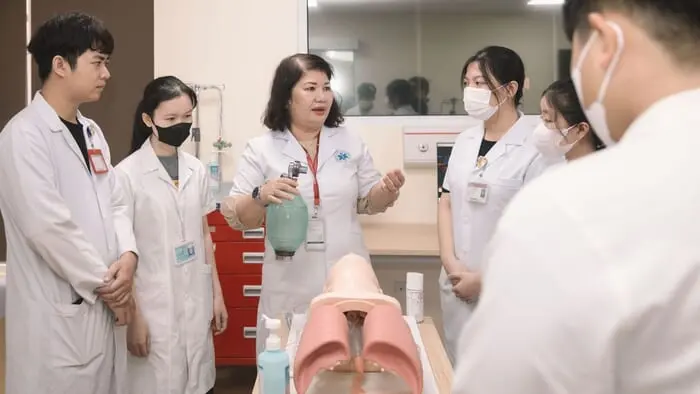
For clinical faculty, the classroom is often a hospital unit, a clinic, a pharmacy, a courtroom or a school. A clinical assistant professor of medicine may spend most of the week seeing patients with residents and students alongside. A physical therapy professor may run the faculty practice where students treat patients under supervision. A clinical law professor supervises students who represent real clients.
Practice is part of the job, and teaching happens through it. Most clinical faculty also teach classes, design curricula, advise students and serve on committees, and many produce scholarship that grows out of practice, such as case reports, quality-improvement projects and teaching innovations.
Demand is strong. On AcademicCareers.com, medicine and dentistry was the second-largest job category in October 2026, with 251 live jobs, and health sciences had 143. The Bureau of Labor Statistics (BLS) projects 18 percent more health specialties teaching jobs between 2025 and 2035, against 3 percent for all occupations.
Clinical faculty pay by state
The map shows the median annual wage of health specialties teachers at colleges and universities in each state in May 2025. The category covers faculty in medicine, dentistry, pharmacy, physical and occupational therapy and other health fields; nursing faculty are counted separately (see our guide to nursing faculty jobs).
See every state in a table
| Rank | State | Median salary | Average salary | Lowest 10% earn under | Top 10% earn over |
|---|---|---|---|---|---|
| 1 | Utah | $168,060 | $174,050 | $53,400 | $331,930 |
| 2 | District of Columbia | $167,520 | $163,940 | $66,810 | $304,510 |
| 3 | California | $165,110 | $196,500 | $65,510 | $381,560 |
| 4 | Washington | $137,520 | $164,770 | $79,520 | $306,040 |
| 5 | Mississippi | $137,220 | $166,400 | $51,030 | $315,480 |
| 6 | Colorado | $136,930 | $186,460 | $69,890 | $360,240 |
| 7 | New Mexico | $134,600 | $183,680 | $42,680 | $355,560 |
| 8 | Massachusetts | $134,520 | $166,200 | $65,910 | $333,290 |
| 9 | New York | $131,220 | $169,320 | $63,810 | $349,360 |
| 10 | Missouri | $130,490 | $156,870 | $61,550 | $282,650 |
| 11 | Iowa | $128,490 | $173,080 | $62,810 | $358,550 |
| 12 | Louisiana | $125,130 | $138,400 | $63,470 | $282,740 |
| 13 | Arkansas | $124,890 | $205,560 | $51,480 | $394,880 |
| 14 | Michigan | $108,970 | $129,570 | $52,020 | $227,920 |
| 15 | Maryland | $108,160 | $144,770 | $64,970 | $306,960 |
| 16 | Texas | $108,150 | $159,640 | $61,390 | $350,500 |
| 17 | Pennsylvania | $107,920 | $136,680 | $49,300 | $244,880 |
| 18 | Vermont | $107,500 | $134,950 | $65,770 | $323,700 |
| 19 | Georgia | $106,960 | $153,130 | $62,780 | $367,270 |
| 20 | Virginia | $106,880 | $142,210 | $62,560 | $312,350 |
| 21 | Delaware | $105,780 | $120,000 | $64,840 | $200,430 |
| 22 | Rhode Island | $103,780 | $126,760 | $61,370 | $213,590 |
| 23 | Minnesota | $103,510 | $120,690 | $51,970 | $210,680 |
| 24 | North Carolina | $103,220 | $141,500 | $60,110 | $329,800 |
| 25 | Oregon | $103,180 | $121,050 | $41,380 | $211,940 |
| 26 | Maine | $103,090 | $136,220 | $57,440 | $280,750 |
| 27 | Idaho | $101,910 | $121,260 | $48,460 | $266,600 |
| 28 | Montana | $101,220 | $128,530 | $49,310 | $297,190 |
| 29 | North Dakota | $100,760 | $112,880 | $63,530 | $177,620 |
| 30 | Arizona | $99,000 | $137,300 | $61,180 | $228,280 |
| 31 | Tennessee | $98,870 | $111,700 | $48,030 | $168,570 |
| 32 | Indiana | $98,170 | $123,720 | $61,710 | $224,740 |
| 33 | New Jersey | $96,630 | $124,280 | $32,220 | $271,030 |
| 34 | Wyoming | $93,480 | $86,050 | $47,920 | $124,120 |
| 35 | Illinois | $92,860 | $113,930 | $49,410 | $214,090 |
| 36 | Alabama | $92,310 | $110,670 | $58,540 | $202,190 |
| 37 | Florida | $88,710 | $131,530 | $60,300 | $305,230 |
| 38 | Kansas | $86,700 | $112,400 | $43,780 | $218,080 |
| 39 | New Hampshire | $85,250 | $132,140 | $64,600 | $305,290 |
| 40 | Kentucky | $83,680 | $113,720 | $50,590 | $227,360 |
| 41 | South Carolina | $82,480 | $95,570 | $59,460 | $137,930 |
| 42 | Wisconsin | $81,500 | $98,120 | $63,130 | $177,000 |
| 43 | Hawaii | $81,480 | $113,980 | $39,490 | $215,140 |
| 44 | Nebraska | $80,960 | $108,000 | $45,210 | $230,190 |
| 45 | South Dakota | $78,720 | $87,460 | $59,270 | $134,040 |
| 46 | Nevada | $77,160 | $103,430 | $49,320 | $212,930 |
| 47 | Oklahoma | $76,450 | $101,650 | $38,300 | $221,890 |
| 48 | Ohio | $74,720 | $95,990 | $44,730 | $208,410 |
| 49 | Alaska | $73,890 | $83,420 | $59,600 | $108,600 |
| 50 | West Virginia | $60,300 | $77,490 | $25,850 | $133,950 |
Utah ($168,060), the District of Columbia ($167,520) and California ($165,110) have the highest medians; West Virginia has the lowest, $60,300. Gaps this wide probably reflect the mix of jobs in each state as much as pay rates: a state where many health faculty are physicians will show a higher median than one where most teach in therapy or technician programs. Connecticut is gray because BLS did not publish a figure.
Hover for averages too. In California the average is $196,500, far above the median, a sign of a group of very high earners at the top. Nationally, the median is $107,310.
Clinical, tenure and research tracks compared
Most medical, dental and health science schools run separate faculty tracks. The names vary (clinician-educator, clinical scholar, academic clinician), but the patterns are similar:
| Clinical track | Tenure track | Research track | |
|---|---|---|---|
| Main work | Patient care or professional practice, teaching, service | Research, teaching, service | Research, mostly grant-funded |
| Appointment | Renewable fixed-term contracts | Probationary years, then tenure | Fixed-term, often tied to funding |
| Promotion judged on | Teaching, clinical excellence, service, scholarship of practice | Research record and funding, teaching, service | Publications, grants, collaboration |
| Research expected | Modest, often applied | Substantial and independent | Substantial, with little teaching |
| Salary paid from | University salary plus clinical revenue | University funds and grants | Mostly grants |
| Tenure | Usually not available | Yes | Usually not available |
The real differences are job security, what you are evaluated on and where your salary comes from. Read the faculty handbook's section on your track before you accept. If research is what you want most, look at tenure-track jobs instead.
Titles you will see in job ads
- Clinical instructor, clinical assistant professor, clinical associate professor and clinical professor: the usual clinical ladder. Some universities put the word after the rank, as in “assistant professor of clinical medicine”.
- Professor of practice or teaching professor: similar non-tenure-track roles in fields such as business, engineering, journalism and public policy.
- Adjunct, affiliate or volunteer clinical faculty: practitioners who teach students at their own hospital, clinic or agency, often unpaid, in exchange for a faculty title and access to university resources.
- Clinical coordinator or director of clinical education: the faculty member who arranges and oversees student placements in programs such as physical therapy, occupational therapy and pharmacy.
The title alone does not tell you whether a job is full-time, salaried or promotable, so read the whole ad. Clinical instructor is the entry rank at many schools and, in nursing, often a part-time role; see clinical instructor jobs.
Contracts, renewal and promotion
Contracts. Clinical appointments are usually fixed-term and renewable, commonly for one to five years, and many institutions offer longer terms after promotion. Your offer letter should state the term, how reappointment works and how much notice you get if a contract is not renewed.
Law is a special case. The American Bar Association's accreditation standards require law schools to give full-time clinical faculty a form of security of position reasonably similar to tenure: either a separate tenure track or, after a probationary period, presumptively renewable contracts of at least five years.
Promotion. Moving from clinical assistant to clinical associate and then clinical professor follows a review much like a tenure review, with a dossier, committees and often letters from outside experts. Committees usually weigh:
- Teaching: learner evaluations, peer observations, awards, curricula you built and the number of learners you supervised.
- Clinical excellence: a reputation beyond your institution, referrals, leadership of clinical programs, quality and safety work.
- Scholarship: case reports, reviews, guidelines, educational materials and presentations, often defined more broadly than on the tenure track.
- Service: committees, professional societies and community programs.
Start an educator portfolio in your first month: a running record of what you taught, to whom, how it was evaluated and what came of it. Rebuilding five years of evidence later is much harder.
Clinical effort and how pay works
Clinical appointments divide your time in percentages of effort. Your offer should state the split, for example 70 percent clinical, 20 percent teaching and 10 percent scholarship or administration. Splits vary widely, and yours sets what you will be evaluated on.
Pay often works differently from other faculty jobs, especially in medical and dental schools. Salary may combine a university base with supplements from a faculty practice plan or affiliated hospital, plus incentive pay tied to clinical productivity, commonly measured in work relative value units (wRVUs) or patient visits. In many nursing, therapy and pharmacy programs, clinical faculty receive a single salary, and practice is either part of the workload or arranged separately.
Worked example (fictional). Dr. Lee, an internist, is offered a clinical assistant professor position at 80 percent clinical effort and 20 percent teaching. Her pay is a university base plus a practice-plan supplement, with a bonus above a wRVU target. Before signing, she asks what the target is and how many colleagues met it last year, whether her teaching time is protected from extra clinic sessions, and what happens to her pay if patient volume falls.
Fields that hire clinical faculty
Clinical appointments are common wherever students learn a profession by practicing it:
| Field | What clinical faculty do | Usually needed |
|---|---|---|
| Medicine and dentistry | See patients while teaching students and residents; run clinics and services | MD, DO, DDS or DMD; license; board certification |
| Nursing | Supervise clinical groups; teach simulation and skills labs | RN license; MSN or doctorate for most roles |
| Physical and occupational therapy | Teach practice skills, run faculty clinics, coordinate placements | DPT, OTD or master's in OT; license |
| Pharmacy | Split time between teaching and a hospital or clinic practice site | PharmD; license; residency training often expected |
| Social work | Teach practice courses; place and supervise students in field agencies | MSW and post-degree practice; license often expected |
| Law | Supervise students representing real clients in law school clinics | JD; bar admission; practice experience |
| Teacher education | Supervise student teachers and teach methods courses | Teaching license, classroom experience, master's degree |
Teachers moving into schools of education will find more in our guide to moving from K-12 teaching to college.
How to apply
- CV: lead with licenses, board or specialty certifications and clinical expertise; then teaching (learners supervised, lectures, curricula); then scholarship and service. Our guide to writing an academic CV shows the format.
- Cover letter: your clinical focus, what you would teach and how your practice would serve the program.
- Teaching evidence: evaluations, a short teaching statement or educator portfolio, and any awards.
- References: a clinical leader who knows your practice and an educator who has seen you teach.
Interviews usually include a presentation, such as grand rounds or a teaching session, and meetings with the clinical team as well as the department. Plan for credentialing early: before you see patients you need a license in the new state and hospital privileges, which can take months.
What to settle before you sign
Clinical offers have more moving parts than most faculty offers. Work through the checklist below, then use our guide to negotiating a faculty job offer.
Before you sign a clinical offer
Tick each item once the answer is in your offer letter or contract.
Your time
Your pay
Contract and promotion
Protections and support
Your ticks are saved in this browser.
Find your next clinical faculty position
Clinical faculty, instructor and tenure-track openings in medicine, dentistry, nursing and the health sciences, with new jobs every day.
Clinical faculty jobsGet free job alertsFrequently asked questions
What is the difference between a clinical assistant professor and an assistant professor?
The rank is the same; the track differs. A clinical assistant professor is usually on a renewable contract and judged mainly on teaching and practice. An assistant professor without the word “clinical” is usually on the tenure track and judged mainly on research. Track names vary, so read the appointment letter.
Can clinical faculty get tenure?
Usually not. The main exception is law, where accreditation standards require tenure or similar security for full-time clinical faculty. Elsewhere, longer renewable contracts after promotion are the usual form of security.
Do clinical faculty do research?
Some do, often clinical trials, quality improvement or education research, but expectations are lighter than on the tenure track, and the effort split limits protected research time.
How much do clinical faculty make?
It depends on the field. Health specialties teachers at colleges earned a median of $107,310 in May 2025 and nursing instructors $80,250 (BLS). Faculty physicians can earn far more, because their pay includes clinical income.
Can I teach part-time while I keep my practice?
Yes. Many clinicians start as adjunct, affiliate or volunteer faculty, precepting students at their own sites, and some later move into salaried clinical appointments.
Can I move from the clinical track to the tenure track?
Sometimes. Some universities allow a change of track through a formal review; others require you to apply for a new position. The faculty handbook sets the rules, so ask before you accept.
Sources
- U.S. Bureau of Labor Statistics, Occupational Outlook Handbook: Postsecondary Teachers (May 2025 pay by field, 2025-35 projections) (link)
- BLS, Occupational Employment and Wage Statistics, May 2025 state estimates (map) (link)
- American Bar Association, Standards and Rules of Procedure for Approval of Law Schools, Standard 405 and its interpretations (security of position for clinical faculty) (link)
- AcademicCareers.com job data, October 2026
- Map: U.S. Census Bureau state boundaries via the us-atlas project (link)